Common Cancers in Malaysia | Symptoms, Risk Factors & Screening Tests
Artikel oleh:
Dr Ooi Poh Siang, Family Medicine Specialist
27 January 2026
World Cancer Day: Understanding Cancer Trends and the Power of Early Detection
In Malaysia, the cancer landscape reveals distinct patterns between genders, with breast cancer and colorectal cancer being major health concerns. Among women, breast cancer remains the most prevalent malignancy, followed significantly by colorectal and lung cancers. For men, colorectal cancer is a leading concern, alongside lung and prostate cancers.
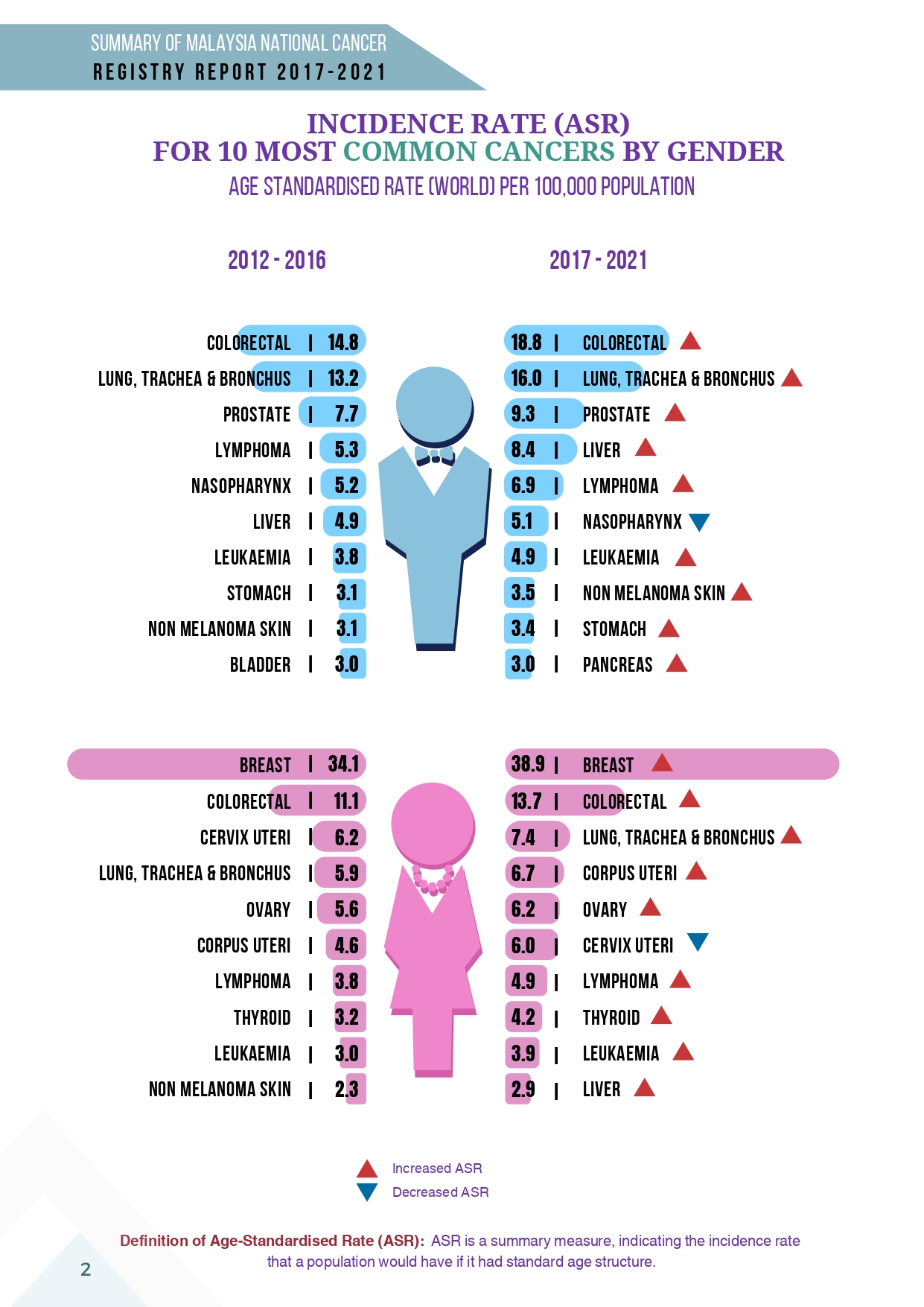
10 Most Common Cancers in Malaysia - The Malaysia National Cancer Registry Report 2017 – 2021
Cancer remains a major health challenge in Malaysia, often developing silently. The following guide outlines the current trends, risk factors, and screening protocols for the most common cancers we treat.
Risk Factors:
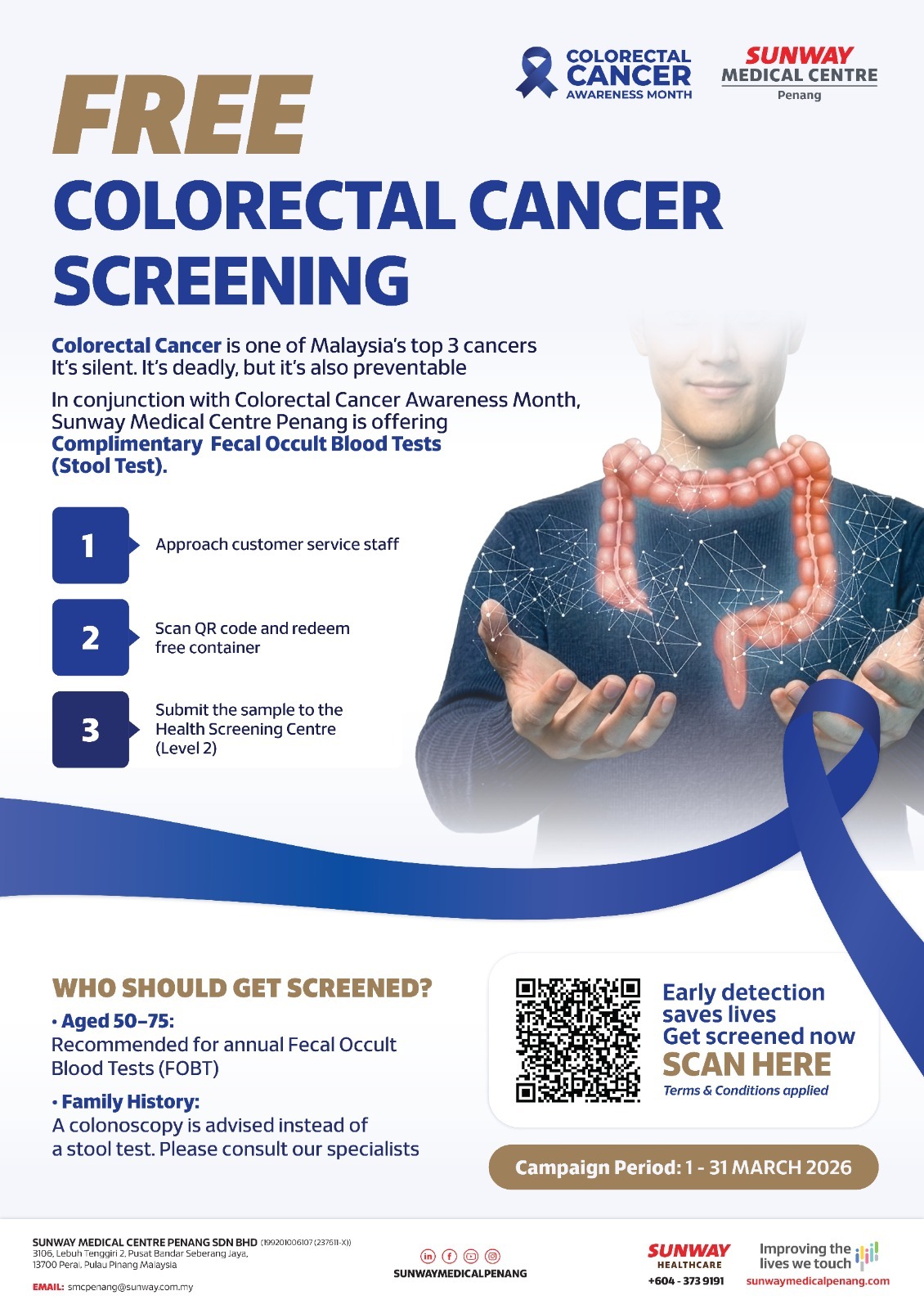
- Diets high in processed meats
- Low fiber intake
- Family history of colorectal cancer
- Smoking
- Obesity
Symptoms:
- Change in bowel habits
- Persistent abdominal discomfort
- Blood in the stool
- Weight lost
The Test:
- General Population:
- iFOBT (Immunochemical Fecal Occult Blood Test) is the initial screening tool.
- Recommended for those aged 50 to 75 years.
- If you have a family history of colorectal cancer, a colonoscopy should begin at age 40 or younger.
Risk Factors:
- Tobacco smoking
- Exposure to second-hand smoke
- Occupational exposure
Symptoms:
- Coughing up blood
- Persistent cough
- Shortness of breath
- Unexplained weight loss
The Test:
- Low-dose CT thorax screening.
- When to do it:
- targeted at individuals aged 50 to 80 years.
- smoking history of at least 20 pack-years.
- current smokers or those who quit within the last 15 years.
Risk Factors:
- Advancing age
- Family history of prostate cancer
Symptoms:
- Difficulty starting urination
- Weak urine flow
- Frequent night time urination
- Back pain
The Test:
- A combination of Prostate Specific Antigen (PSA) blood tests, physical examination, and ultrasound.
- When to do it: Men over 50 should discuss screening with their physician.
Nasopharynx Cancer (NPC)
Risk Factors:
- Family history of nasopharynx cancer
- Dietary factors (such as salted fish consumption)
- Chronic infection with the Epstein-Barr Virus (EBV)
- Smoking
Symptoms:
- Neck lumps
- Blood-stained phlegm
- Hearing changes
The Test:
- Screening is conducted using the EBV VCA IgA blood test to detect specific antibodies.
- When to do it: Particularly important for individuals with a family history or persistent ear, nose, and throat symptoms.
Risk Factors:
- Hormonal factors
- Obesity
- Lack of physical activity
- Family history of breast cancer
- Smoking
Symptoms:
- A new lump in the breast or armpit
- Skin thickening
- Nipple discharge
The Test:
- Ultrasound and Mammogram.
- When to do it:
- General Population: Every 2 years for women aged 50 to 74 years.
- High Risk: Screening may be offered starting from age 30.
Risk Factors:
- Persistent infection with high-risk HPV (Human Papillomavirus)
- Having more than three sexual partners
- Starting sexual activity at a young age
- Long-term use of oral contraceptives
- Smoking
Symptoms:
- Abnormal vaginal bleeding
- Unusual discharge
- Pain during intercourse
The Test:
- Pap smear and/or HPV testing.
- When to do it:
- All sexually active women
- Under 30: Pap smear once a year for two years; if normal, then every 3 years.
- Aged 30–65: Pap smear and/or HPV thttps://adsmanager.facebook.com/adsmanager/?act=217423069993789est. If HPV negative, re-test every 5 years.
- Over 65: An HPV test is recommended if never screened previously.
A Personal Note to All Malaysians
Despite the availability of screening services, our community’s participation remains critically low. National data reveals a troubling reality: 46% of women do not perform regular breast self-examinations, and an even more concerning 71% have never had a mammogram. The numbers for other preventable cancers are just as alarming, with 65% of eligible women failing to undergo a pap smear and 88% of the population not utilizing the iFOBT stool test for colorectal screening.

Screening is fundamentally designed for individuals who are currently asymptomatic; it means undergoing tests when you don’t have any symptoms yet. You should not wait until you feel unwell or notice physical changes to seek medical advice, as many cancers are asymptomatic in their early, most treatable stages. By the time symptoms appear, the disease may have already progressed, which is why proactive screening is your best chance at a successful outcome.
Please consult with a medical professional to determine the appropriate screening schedule for your specific risk profile.
References
- Summary of Malaysian National Cancer Registry Report (2017-2021)
- Clinical Practice Guidelines, Management Of Colorectal Carcinoma 2017
- American Cancer Society
- Sinha S, Dickey BL, Coghill AE. Utility of Epstein-Barr virus (EBV) antibodies as screening markers for nasopharyngeal carcinoma: a narrative review. Ann Nasopharynx Cancer 2022;6:6.
- Clinical Practice Guidelines, Management Of Breast Cancer 2019
- Guidelines For Cervical Cancer Screening In Malaysia 2023
- National Health and Morbidity Survey (NHMS) 2023
Back