Cancer Prevention Starts at Home | Diet, Exercise, Sleep & Habits That Matter

文章作者: Dr Ooi Poh Siang, Family Medicine Specialist

03 February 1970

Fighting Cancer from Your Living Room: Deep Dive into Lifestyle Medicine

As a family physician, I spend a lot of time talking about "lifestyle modification." I know—it sounds like a boring textbook term. But in reality, it is the most powerful tool in our medical bag. What if I told you that the choices you make between your morning alarm and your bedtime snack are some of the most powerful "prescriptions" I could ever give you?

Hands with Cervical Cancer Ribbon Near Stethoscope

Cancer can feel like a scary, unpredictable lottery. While we can’t change our DNA, we can change how our DNA is expressed. We have a massive amount of influence over our environment. Let’s look at the four pillars of cancer prevention: what we eat, how we move, how we rest, and what we quit. I’ve brought the evidence; you bring the willingness to try.


The Plate: Eating to Starve Cancer

We often think of food as fuel, but it’s also information for your cells. Here is how to eat like your life depends on it (because it does!):


The "More Of" List (The Life Savers)

  • Fiber is King: Aim for at least 30–35 grams of fiber daily. In the Seventh-Day Adventist Health Study, high fiber was linked to a 40% reduced risk of colon cancer.  
  • The Legume Powerhouse: Beans aren't just a side dish. Eating beans twice a week can lower colon cancer risk by 42%. If you eat them three times a week, you could slash prostate cancer risk by 47%. They even lower the risk of pancreatic cancer.
  • The Fruit Factor: Eating fruit just twice a day was associated with a 75% reduction in lung cancer risk compared to those who ate it less than three times a week.
  • Antioxidant Superstars: Focus on whole foods, not pills! Antioxidant supplements don’t seem to help, but the foods they come from do.  
    • Beta-carotene: carrots, sweet potatoes, spinach, kale
    • Lycopene: tomatoes, watermelon, guava, pink grapefruit (great for the prostate!)
    • Resveratrol: red grapes, blueberries, peanuts, soy (great for the prostate!)
    • Selenium: Brazil nuts, sunflower seeds, fish, mushrooms
    • Vitamin C: cantaloupe, citrus fruits, kiwi, mango, berries
    • Vitamin E: almonds, peanuts, green leafy vegetables
  • Soy is safe and protective: Whole soy (edamame, tempeh) is linked to lower breast and prostate cancer risks.  
  • The 12% Advantage: Data from the EPIC-Oxford study shows that vegetarians and vegans have a 12% lower overall cancer risk. 
  • Specific Nutrients: High intake of Folate, Vitamin B6, Calcium, and Vitamin D are shown to reduce colon cancer risk. 


The "Less Of" List (The Not-so-Good Stuff)

  • Red & Processed Meats: Frequent beef consumption can double the risk of bladder cancer, and eating meat several times a week is linked to a 60% higher risk of colon cancer.  
  • The Frying Pan Trap: Frying can degrade healthy omega-3s and, if oil is heated too long, it creates aldehydes—toxic substances associated with cancer and heart disease.  
  • Ultra-Processed Foods: Limit "fast foods" and items high in sugars and starches to help maintain a healthy weight. 


The Move: Exercise as Medicine

If we could put exercise into a pill, it would be the most expensive drug on the market. Luckily, a pair of sneakers is much cheaper.


Why Sweat?

  • Breast Cancer: Physical activity can lead to a 34% reduction in risk of death for women with breast cancer and a 41% reduction in all-cause mortality. Comparing the most active to the least active people, there is a 25% decreased risk of developing it in the first place.
  • Colon Cancer: Staying active reduces colon cancer risk by 17–30%.  


The Prescription

  • How much? The goal is roughly 3–4 hours of moderate to vigorous activity each week.  
  • Dose-Response: The more you do, the more protection you get—there is a clear "dose-response" relationship.  
  • During Treatment: Exercising during cancer treatment is now recommended! It improves cardiorespiratory fitness, body composition, and quality of life.  
  • The Mental Edge: A mix of aerobic and resistance training helps fight the "Big Three" of cancer treatment: anxiety, depression, and fatigue.  
  • Individualized Care: Always ask your doctor for an individualized plan, as factors like bone health and treatment tolerance are important.


The Pillow: Sleep is Not a Luxury

We often sacrifice sleep to get more done, but your immune system does its best "detective work" while you snooze.


What Happens While You Sleep?

  • The Repair Crew: While you are in deep sleep, your body performs DNA repair and releases anti-cancer cytokines (like IL-1 and TNF-alpha).  
  • The Melatonin Shield: Sleep disruption suppresses melatonin, which in turn suppresses your immune system and increases cancer-stimulating cytokines.  
  • The Consequences: Short sleep duration or poor quality is directly correlated with higher risks of breast, endometrial, prostate, and colorectal cancers, as well as leukemia.  
  • Doctor’s Tip: Think of sleep as your body's nightly "software update." If you keep hitting "remind me later," the system eventually crashes.


The Substance: Quitting the "Big Two"

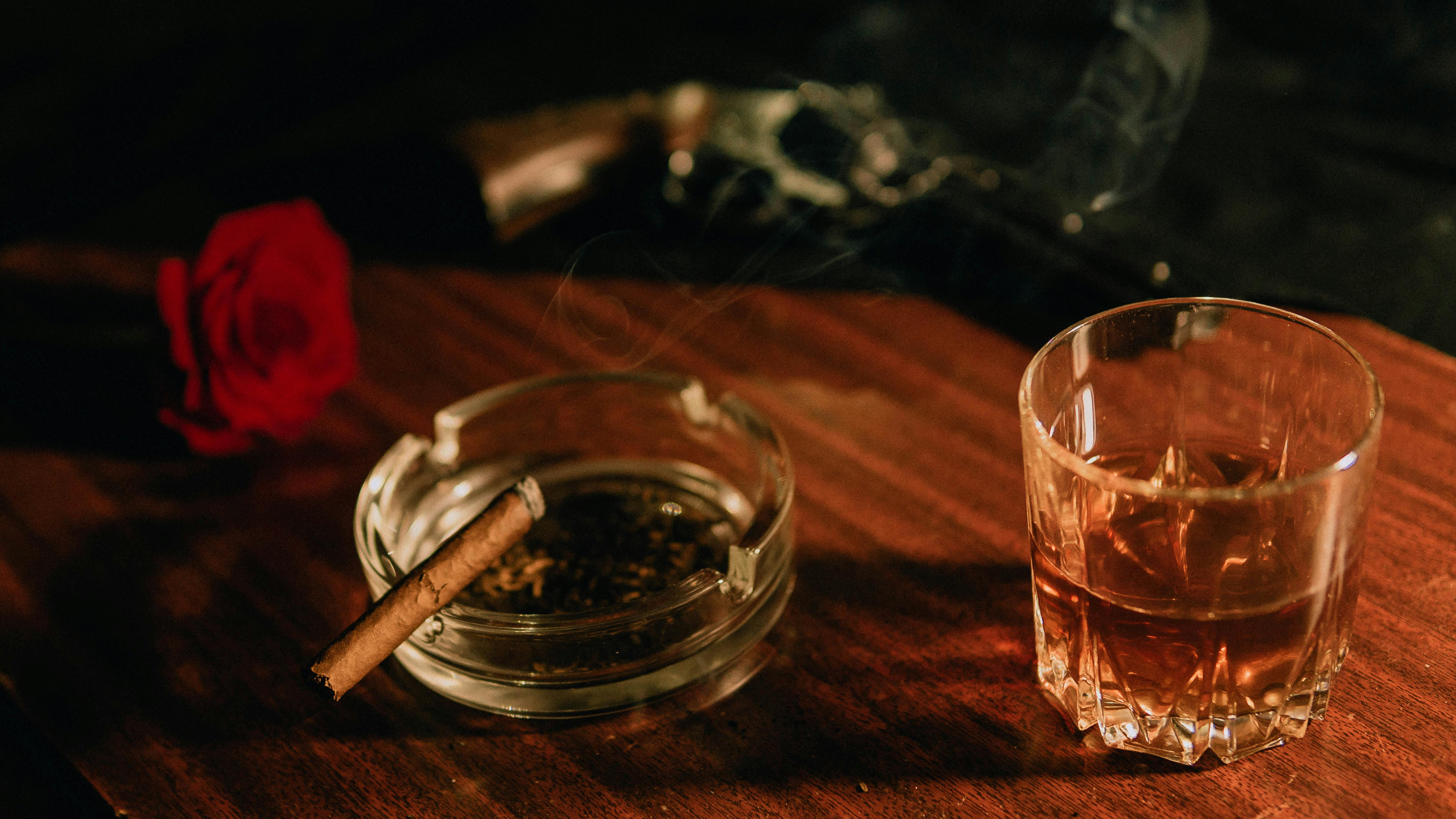
I know, I know. Smoking and drinking are the "fun" killers. But the numbers from the Harvard Nurses' Health Study and other major research are hard to ignore.


Smoking: The Heavy Hitter

  • The 1-in-3 Rule: If no one used tobacco, one in three cancer deaths would simply not happen.  
  • Lung Cancer: Smoking explains 90% of lung cancer risk in men and 70–80% in women. It affects almost every part of the body.  


Alcohol: The Silent Risk

  • Not just a "liver" problem: Alcohol is linked to breast and colon cancers.  
  • One is enough: Even one alcoholic drink per day increases the risk of breast cancer.  
  • Two is too many: Two drinks per day significantly raises the risk of colon cancer.  
  • For prevention, it is best not to drink at all.


The "Group 1" Warning: No More Guesswork

I know, I know. Smoking and drinking are the "fun" killers. But the numbers from the Harvard Nurses' Health Study and other major research are hard to ignore.

Group 1 Carcinogens are at the very top of that list—meaning there is "convincing evidence" that they cause cancer. To give you some perspective, tobacco is a Group 1 carcinogen. But did you know that processed meats (like sausages and bacon) and alcohol are also in Group 1? While a hot dog doesn't carry the same level of risk as a cigarette, they are both in the same category because the scientific proof of their link to cancer is equally strong. As your doctor, I want you to know that reducing these "Group 1" exposures is one of the most direct ways to protect your long-term health.


The AICR Recommendations

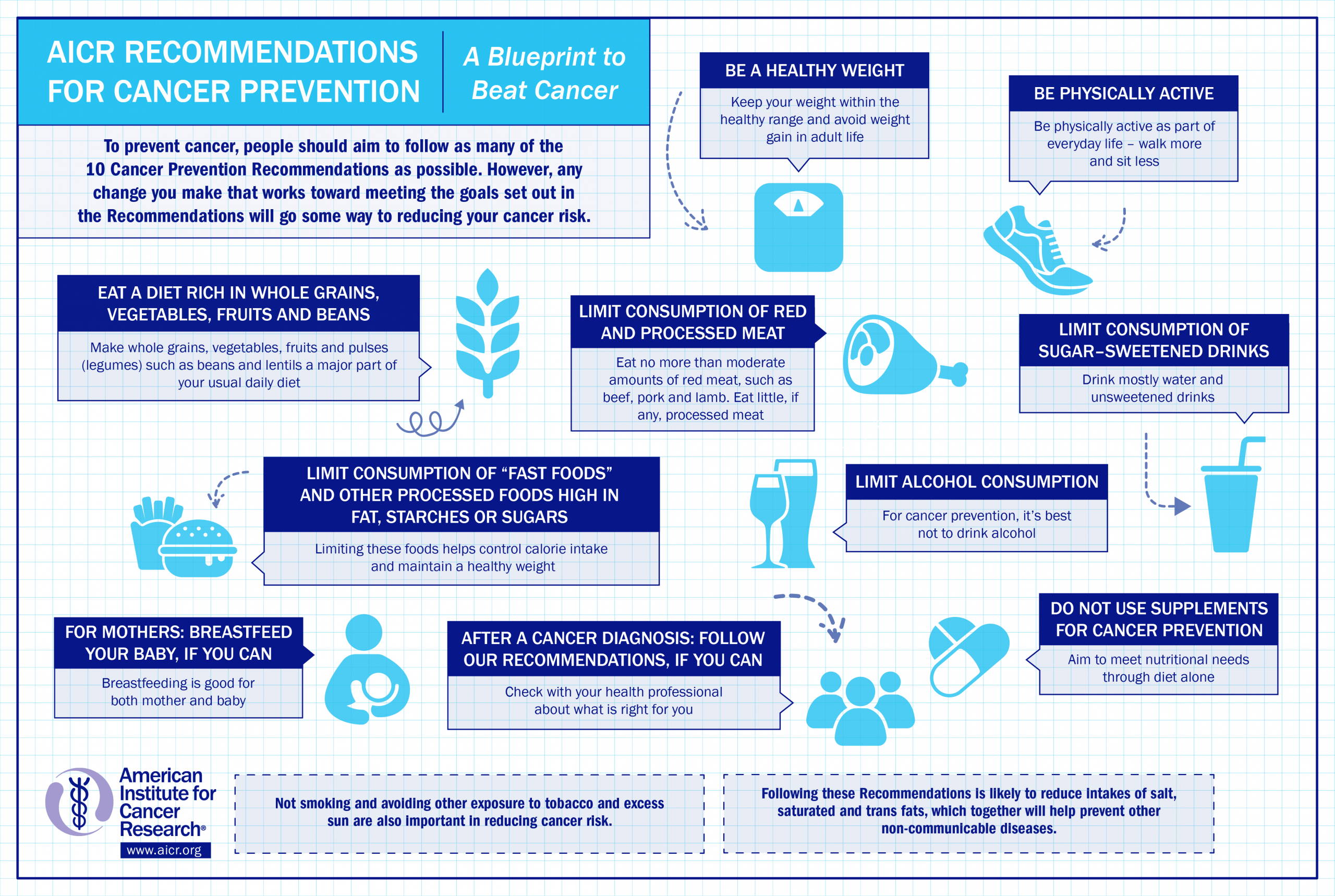
To wrap this up, the American Institute for Cancer Research (AICR) provides ten lifestyle-based recommendations for cancer prevention:

American Institute for Cancer Research (AICR) recommendation for cancer prevention

10 AICR Recommendations for Cancer Prevention - American Institute for Cancer Research (AICR)


Final Thoughts From Me

You don’t have to be perfect; you just have to be better. If you currently eat meat every day, try "Meatless Monday." If you don't exercise, start with a 15-minute walk. Every step toward these goals reduces your risk.

I’d rather see you in my office for a coffee and a chat than for a biopsy. Your future self will thank you. Let’s start today!


References

  • Bonnet JSCJ. Foundations of Lifestyle Medicine Board Review Manual, 4th ed. American College of Lifestyle Medicine; 2023
  • Adventist Health Study
  • Davey GK, Spencer EA, Appleby PN, Allen NE, Knox KH, Key TJ. EPIC-Oxford: lifestyle characteristics and nutrient intakes in a cohort of 33 883 meat-eaters and 31 546 non meat-eaters in the UK. Public Health Nutr. 2003;6(3):259-269. doi:10.1079/PHN2002430
  • Hayes SC, Johansson K, Alfano CM, Schmitz K. Exercise for breast cancer survivors: bridging the gap between evidence and practice. Transl Behav Med. 2011;1(4):539-544. doi:10.1007/s13142-011-0082-7
  • International Agency for Research on Cancer (IARC)
  • American Institute for Cancer Research (AICR)
   返回

优惠

Enquiry Form

Loading ...