Shopping Cart
No item in your cart!
RM0.00

Meskipun stroke dapat menyebabkan kecacatan yang serius, stroke bisa dicegah. Pencegahan stroke yang efektif sering kali tidak memerlukan obat-obatan atau prosedur medis yang rumit. Banyak langkah pencegahan yang penting sebenarnya hanyalah kebiasaan sehari-hari dan pilihan pengelolaan kesehatan rutin yang bisa dilakukan oleh siapa saja.
Bagi mereka yang belum pernah mengalami stroke, tujuannya adalah mengelola faktor risiko sebelum stroke terjadi. Bagi mereka yang sudah pernah mengalami stroke atau TIA, risiko mengalami stroke berulang diperkirakan 30% dalam 5 tahun, sehingga pencegahan sekunder menjadi sangat penting.

Mengubah kebiasaan sehari-hari adalah salah satu cara paling efektif untuk mencegah stroke.
Mengontrol tekanan darah tinggi adalah langkah paling berpengaruh yang bisa kita ambil untuk mengurangi risiko stroke. Tekanan darah tinggi adalah faktor risiko utama stroke, dan menjaganya dalam kisaran yang sehat (di bawah 130/80 mmHg) dapat mengurangi kemungkinan terjadinya stroke secara signifikan.
Langkah utamanya meliputi:
Berolahraga secara rutin membantu memperkuat jantung, meningkatkan sirkulasi darah, menjaga berat badan yang sehat, serta secara langsung menurunkan tekanan darah, kadar gula darah, dan kolesterol. Orang dewasa disarankan untuk berolahraga setidaknya 150 menit aktivitas aerobik intensitas sedang setiap minggu.
Aktivitas yang cocok antara lain:
Mengurangi asupan garam sangat penting untuk mengontrol tekanan darah, sementara mengurangi lemak jenuh membantu mengontrol kadar kolesterol. Kurangi makanan yang tinggi kandungan:
Sebaliknya, perbanyak:
Merokok adalah penyebab stroke yang langsung dan signifikan. Rokok merusak pembuluh darah, menaikkan tekanan darah, mengurangi kadar oksigen dalam darah, dan membuat pembekuan darah lebih mudah terjadi. Berhenti merokok di usia berapa pun akan mengurangi risiko stroke, dan manfaatnya mulai terasa dalam beberapa minggu setelah berhenti. Mantan perokok dapat mengurangi risiko stroke mereka secara signifikan dalam beberapa tahun setelah berhenti.
Konsumsi alkohol berlebihan meningkatkan tekanan darah dan risiko fibrilasi atrium, keduanya merupakan faktor risiko stroke. Mengurangi konsumsi alkohol atau berhenti sepenuhnya sangat dianjurkan, terutama bagi individu yang sudah memiliki faktor risiko stroke lainnya.
Kelebihan berat badan berkontribusi pada tekanan darah tinggi, diabetes, kolesterol tinggi, dan sleep apnea, yang semuanya meningkatkan risiko stroke. Menjaga berat badan yang sehat melalui kombinasi pola makan sehat dan olahraga rutin adalah salah satu hal paling bermanfaat yang bisa dilakukan seseorang untuk kesehatan kardiovaskular jangka panjang mereka.
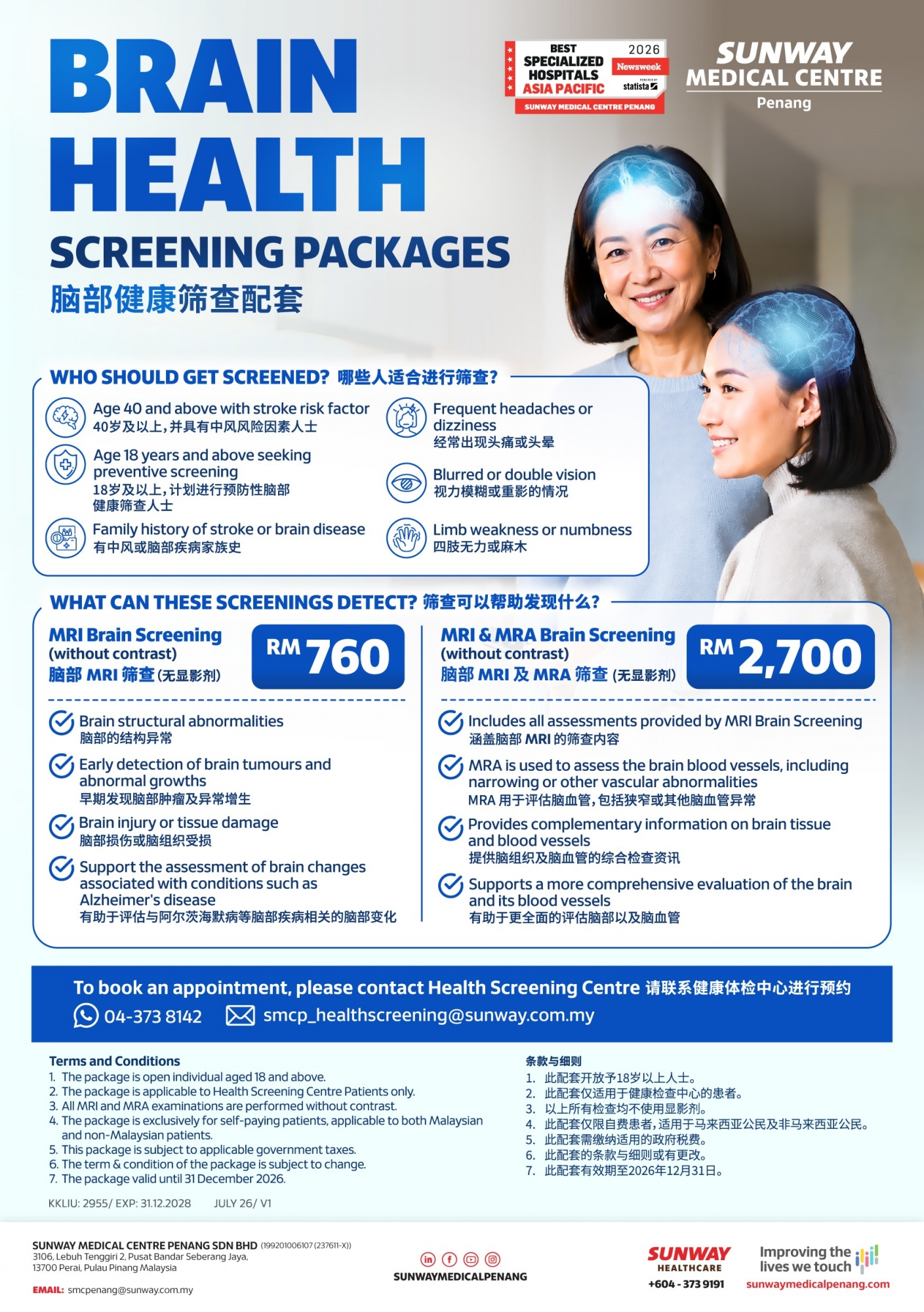
Banyak faktor risiko stroke seperti tekanan darah tinggi, kolesterol tinggi, dan diabetes tidak menunjukkan gejala apapun. Mengidentifikasi dan mengelola kondisi-kondisi ini melalui pemeriksaan kesehatan berkala adalah salah satu langkah paling efektif yang bisa kita lakukan untuk mencegah stroke. Pemeriksaan kesehatan idealnya dimulai pada usia 30 tahun untuk semua orang dewasa, dan lebih awal jika ada riwayat keluarga dengan penyakit jantung, stroke, diabetes, atau hipertensi.
Di Sunway Medical Centre Penang, paket pemeriksaan kesehatan tersedia untuk membantu Anda memahami profil risiko saat ini dan tahu apa langkah selanjutnya yang perlu diambil.
Bagi penyintas stroke, stroke kedua sering kali lebih parah dari yang pertama dan membawa risiko kecacatan serius dan kematian yang lebih tinggi. Oleh karena itu, mencegah stroke berulang adalah salah satu prioritas terpenting dalam perawatan jangka panjang.
Pencegahan sekunder dibangun di atas semua langkah di atas, namun memberikan penekanan tambahan pada mengidentifikasi dan langsung mengobati penyebab spesifik dari stroke pertama.
Sebagian penyintas stroke menghentikan obat pencegahan mereka dalam beberapa bulan setelah keluar dari rumah sakit. Melanjutkan obat yang diresepkan dan menghadiri janji tindak lanjut secara rutin bukan pilihan, melainkan keharusan, meskipun Anda merasa sudah pulih sepenuhnya.
Memahami risiko stroke Anda memang berguna. Tapi yang benar-benar membuat perbezaan adalah konsisten bertindak dengan dukungan yang tepat. Baik Anda baru pertama kali mengambil langkah untuk melindungi kesehatan, atau sedang mengelola risiko setelah stroke, arahnya tetap sama: ketahui angka-angka Anda, minum obat Anda, buat perubahan gaya hidup yang berarti, dan tetap terhubung dengan tim kesehatan Anda.
Pelajari lebih lanjut tentang perawatan stroke di Pusat Stroke kami di Penang
Baca Selengkapnya: Apa itu Stroke? | Bagaimana Stroke Didiagnosis? | Gejala dan Tanda Peringatan Stroke | Faktor Risiko Stroke | Pengobatan Stroke | Spesialis Stroke | Rehabilitasi Stroke



















Make Appointment Now
Looking for Specialist Care? Schedule a Consultation Today.