Shopping Cart
No item in your cart!
RM0.00

Cervical cancer is a cancer that develops in the cervix – the lower part of the uterus (womb) that connects to the vagina. Most cervical cancers begin with abnormal changes in the cervical cells, often caused by persistent infection with human papillomavirus (HPV). In fact, over 99% of cervical cancer cases are linked to persistent high-risk HPV infections
The good news is that cervical cancer is largely preventable through HPV vaccination and cervical cancer screening. It is also highly treatable and curable if detected early, before the cancer has spread.
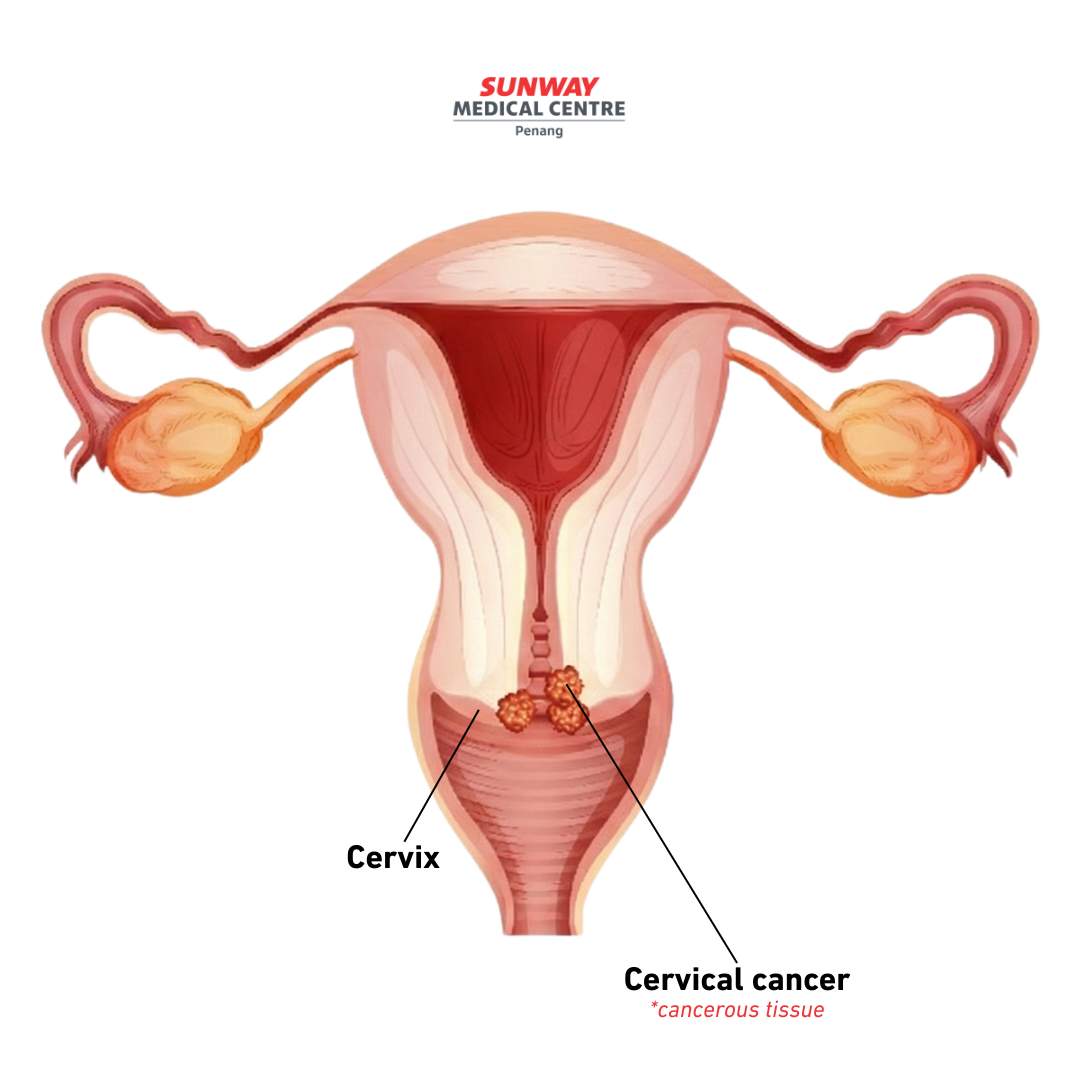
In Malaysia, cervical cancer has historically been one of the major cancers affecting women, but recent trends show encouraging improvement. It now ranks as the sixth most common cancer among women in Malaysia. Current estimates indicate that around 1,682 women are diagnosed with cervical cancer each year in Malaysia.
Incidence rates have been steadily declining over the past decade. According to the Malaysia National Cancer Registry and Ministry of Health (MOH) data, the incidence dropped from 7.6 per 100,000 women (2007–2011) to 6.0 per 100,000 women in 2017–2021.
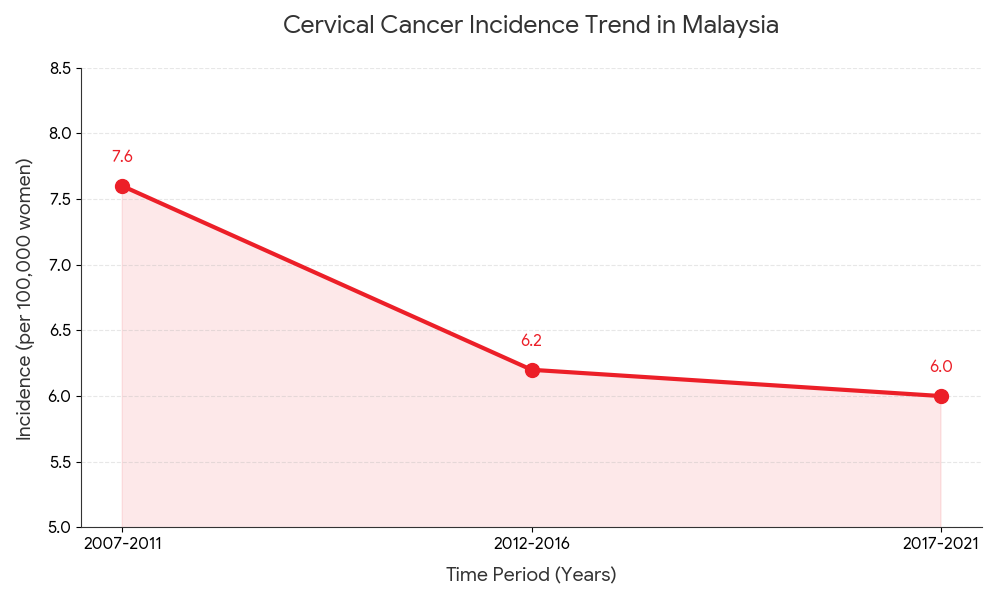
This positive trend is largely credited to Malaysia’s concerted prevention efforts – especially the national HPV vaccination programme and improved cervical cancer screening coverage.
In the early-stage, cervical cancer often causes no symptoms at all. A woman can feel completely healthy while precancerous changes or an early tumour is developing in the cervix – which is why regular cervical cancer screening (Pap smears or HPV tests) is so important for early detection.
As the disease progresses to an invasive cancer, however, signs and symptoms may appear, they can include:
If any of these symptoms persists, it’s best to speak to a doctor for an evaluation. Early investigation and diagnosis lead to better outcomes.
Not all cervical cancer starts from the same cells. The type of cervical cancer tells doctors where it began, how it tends to grow, and which tests or scans maybe used to assess it.
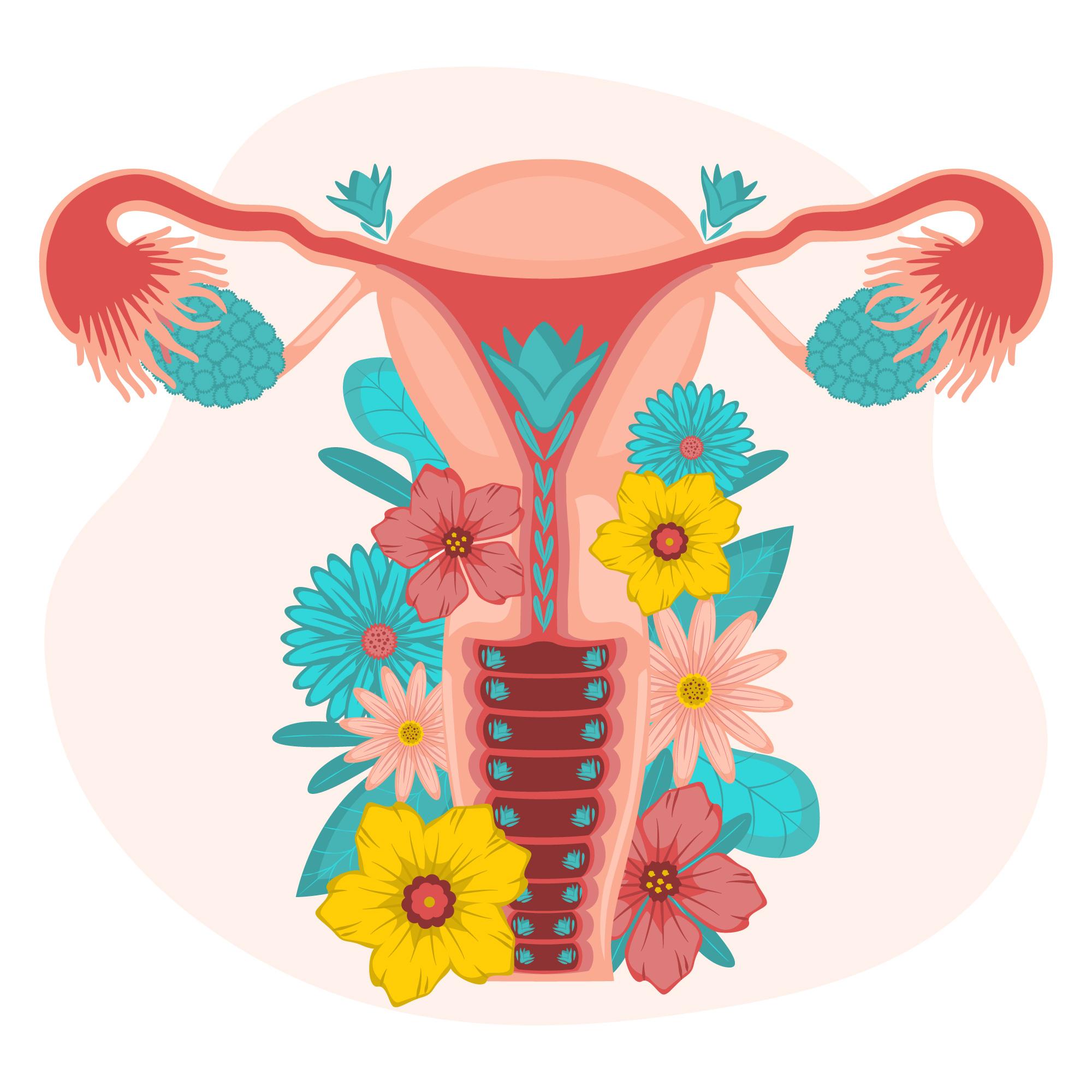
This type starts from squamous cells on the outer surface of the cervix. It commonly develops in the transformation zone – the area where two cell types meet and where abnormal cell changes are more likely to happen.
Squamous Cell Carcinoma also knowns as the most common type of cervical cancer, accounting for 80-90% of cervical cancers.
Adenocarcinomas start from glandular cells in the cervical canal (endocervix) - slightly “higher up” inside the cervix. Because of where it begins, it can sometimes be harder to spot early if changes are occurring deeper in the canal.
This type of cancer makes up 10-20% of cervical cancers and seems to have become more common in the past 20 – 30 years.
Upon diagnosis of cervical cancer, doctors will determine the stage of the disease. The stage describes how advanced the cancer is, or in other words, how much it has grown and whether it has spread beyond the cervix. Generally, the higher the stage number, the more the cancer has spread, and the more intensive treatment may need to be.
| Stage 1 | Stage 2 |
|
- The cancer has not spread anywhere outside the cervix. This is early-stage cervical cancer. |
- The cancer has grown beyond the cervix to nearby areas but is still not in the lower vagina or pelvic wall. |
| Stage 3 | Stage 4 |
|
- The cancer might have grown into the lower part of the vagina or into the pelvic wall. - It may also block the ureters (tubes from kidneys to bladder), cause kidney issues, or involve pelvic lymph nodes |
- This is the most advanced stage, where the cancer has spread beyond the pelvis. - The cancer may have invaded adjacent organs like the bladder or rectum (Stage IVA) or spread to distant organs such as the lungs, liver, or distant lymph nodes (Stage IVB) |
Cervical cancer is one of the few cancers where we can do something meaningful before it becomes serious — through screening and HPV vaccination. These steps help detect early cell changes or reduce the risk of cervical cancer developing in the first place.
Cervical cancer screening looks for early cervical cell changes before they turn into cancer. It is especially important because early cervical cancer often has no symptoms.
This screening is recommended for women from age 21–30 onward (depending on sexual activity and risk factors) up to around 65 years old.
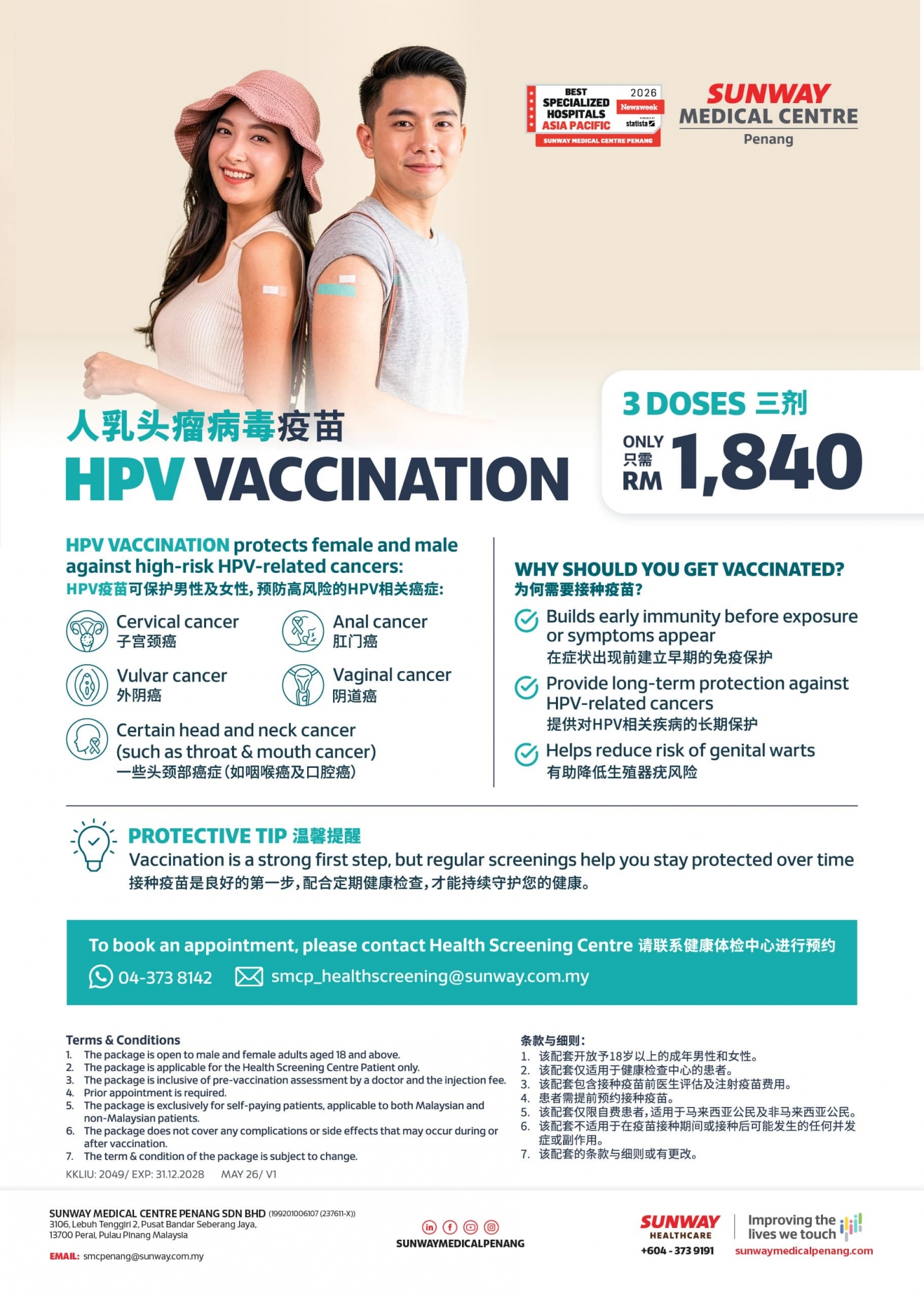
The HPV vaccine is commonly referred to as the cervical cancer vaccine because it protects against the HPV types most closely linked to cervical cancer. It is most effective when given before exposure to HPV, but some adults may still benefit depending on age and medical history.
Cervical cancer often shows no early symptoms, which is why screening matters — even when you feel completely fine. Early detection can identify cervical cell changes before they become serious.
Take the next step — book a cervical cancer screening at Sunway Medical Centre Penang.
.png)






































Make Appointment Now
Looking for Specialist Care? Schedule a Consultation Today.