Shopping Cart
No item in your cart!
RM0.00

Article by: Anonymous
27 August 2026
Penang is once again experiencing poor air quality. After a brief improvement in early October, haze conditions returned on 8 October 2026, with three of the state's four monitoring stations recording unhealthy Air Pollutant Index (API) readings. According to the hourly readings on the Department of Environment's APIMS portal, Seberang Perai peaked at API 156, Minden at 156 and Seberang Jaya at 154, while Balik Pulau stayed at a moderate level throughout the day. Penang State Executive Councillor for Youth, Sports and Health Daniel Gooi advised the public to limit outdoor activities and wear face masks when heading out.
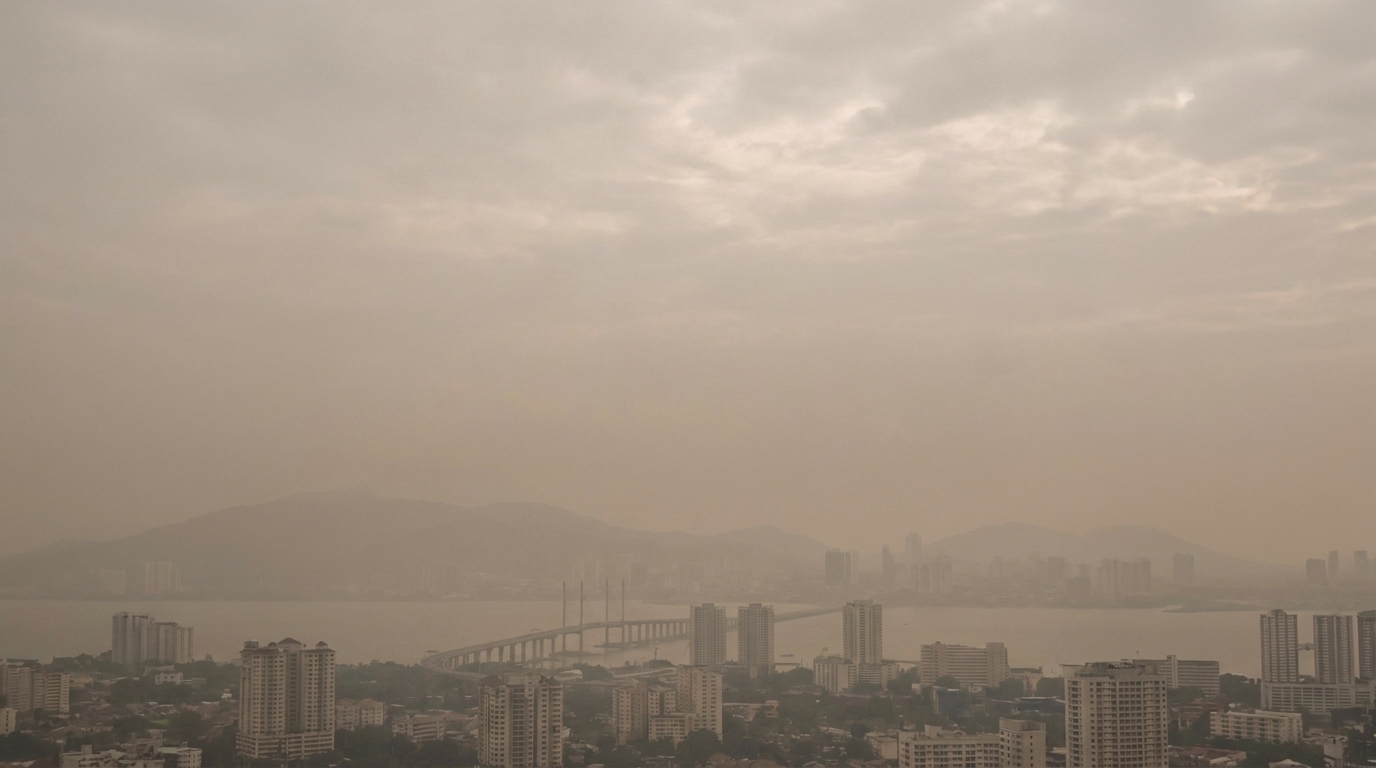
Haze episodes in Malaysia tend to be recurring rather than one-off events, particularly during the Southwest Monsoon season, which runs from May to September. Even as the monsoon season draws to a close, transboundary haze from Kalimantan and Sumatra continues to affect air quality across Peninsular Malaysia into October. This is a good time to understand what haze actually does to the body, who is most at risk, and what you can do to reduce your exposure.
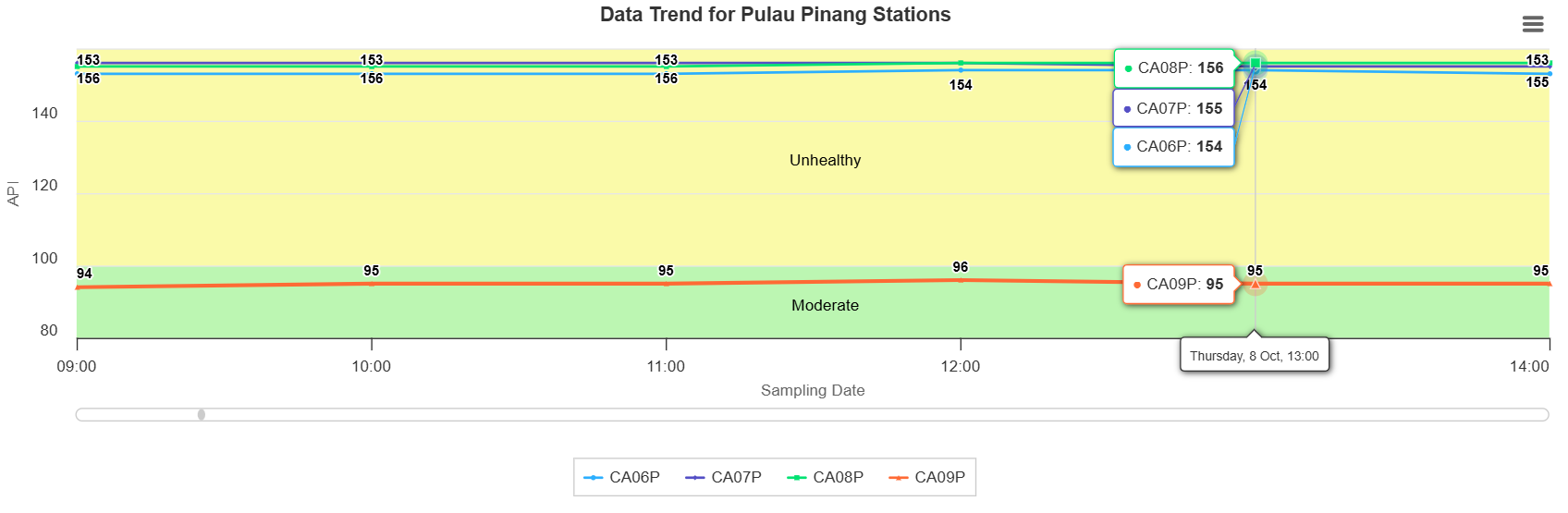
Penang Hourly API Readings, 8 October 2026 - Department of Environment (DOE)
Malaysia uses the Air Pollutant Index (API), managed by the Department of Environment (DOE), to measure and report air quality across 68 monitoring stations nationwide. Readings are updated every hour.
Penang's air quality improved in early October. At 8am on 06 October 2026, Minden recorded an API of 45 and Balik Pulau dropped to 23, both in the good range.
The improvement did not last. On 08 October 2026, the API climbed back into the unhealthy range at three of the state's four monitoring stations. The hourly readings below are taken from the DOE APIMS portal for 8 October 2026, shown from 10am to midnight.
Preventive and Health Control Measures That Must Be Followed During Hazard - Ministry Of Health Malaysia






Malaysia’s API takes into account a few key pollutants: PM2.5, PM10, ozone, carbon monoxide, sulphur dioxide and nitrogen dioxide. During haze episodes in Malaysia, PM2.5 is typically the dominant concern.
PM2.5 refers to airborne particles smaller than 2.5 micrometres in diameter. To put that in perspective, a single human hair is roughly 70 micrometres wide. These particles are too small to be filtered by your nose or throat and can travel deep into the lungs and, in some cases, can trigger inflammation and cardiovascular effects.
One important note: the API’s particulate sub-index is based on a rolling 24-hour average. This means the reading you see right now may not fully reflect a sudden worsening in air quality over the past hour. If you want a more immediate picture, check a live PM2.5 reading alongside the API.

Haze is not simply an inconvenience. The health effects of PM2.5 exposure are well documented and go beyond the respiratory system.
When PM2.5 particles are inhaled, they penetrate deep into the airways and reach the alveoli (the tiny air sacs in the lungs where oxygen exchange takes place). Short-term exposure can cause:
For people who already have respiratory conditions, even moderate API levels may worsen symptoms.
This is the part most people do not expect. According to a Ministry of Health Malaysia advisory, the tiny particles found in haze can penetrate deep into the lungs and, once inhaled, may enter the bloodstream. They may then interact with compounds such as “bad” cholesterol and contribute to inflammation and other damaging effects. Prolonged exposure has been associated with:
Research published in the National Institutes of Health database found that PM2.5 exposure is associated with increased emergency department visits for acute coronary syndrome, acute heart failure, and stroke. People with pre-existing heart disease are particularly vulnerable, even during short-term haze episodes.
The MOH advisory also highlights that prolonged PM2.5 exposure during pregnancy has been linked to adverse outcomes including low birth weight and premature delivery. Pregnant women should take extra precaution during haze periods and consult their doctor if they have concerns.

While haze affects everyone, certain groups face greater health risks even at lower API levels. These include:
It is a common assumption that haze is only a problem for high-risk individuals. This is not entirely accurate. The Ministry of Health has noted that prolonged or high-level PM2.5 exposure can also affect otherwise healthy individuals. If you are spending extended time outdoors during a haze episode, the precautions in the next section apply to you too.
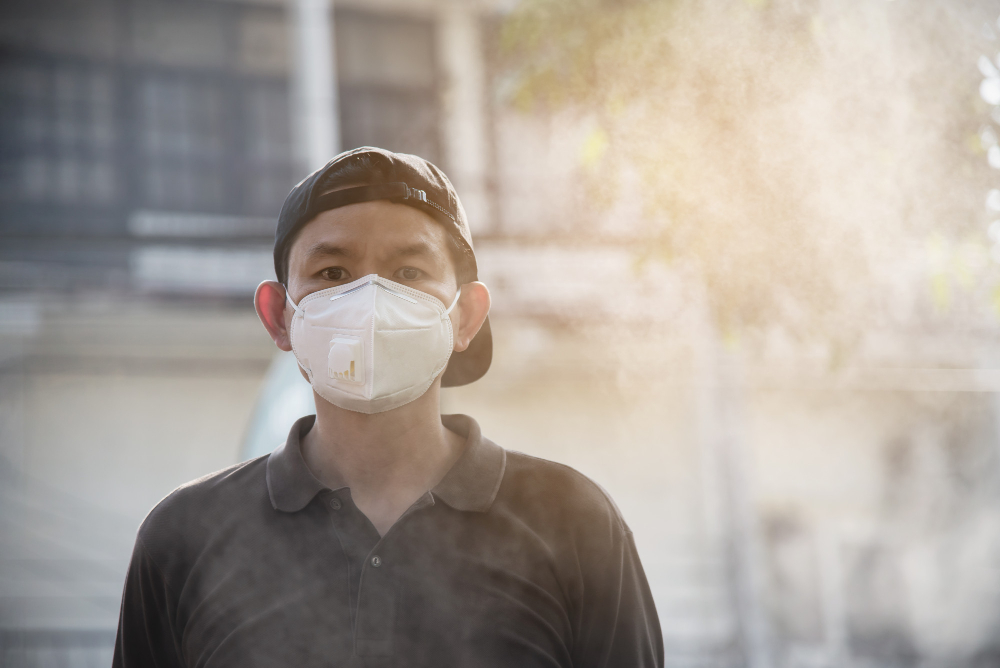
This is one of the most misunderstood aspects of haze protection. According to the Ministry of Health Malaysia, haze particles can be as small as 2.5 micrometres. A standard surgical or cloth mask cannot filter particles this fine. Only a well-fitting N95 or equivalent respirator is effective at filtering PM2.5 when exposure cannot be avoided.
Important notes on N95 use:

Some symptoms during a haze period are mild and temporary. Others are a sign that you need to see a doctor promptly.
Do not wait for symptoms to become severe. Seek medical advice if symptoms persist, worsen, or concern you. You can reach our team at Sunway Medical Centre Penang for a consultation, or call us at 04-373 9191.
Haze is more than an inconvenience. The fine particles in polluted air can affect your lungs, your heart, and your long-term health, particularly if you are in a high-risk group or spending extended time outdoors.
The most practical thing you can do right now is check the latest API reading for your area, reduce unnecessary outdoor exposure when the reading is above 100, and consider using a well-fitting N95 or equivalent respirator when exposure cannot be avoided.
If you or a family member develop symptoms that concern you, please seek medical advice promptly.
 Back
Back


























Make Appointment Now
Looking for Specialist Care? Schedule a Consultation Today.