Shopping Cart
No item in your cart!
RM0.00

Article by: Dr Lim Han Sim
11 September 2026
For many patients and families, a scoliosis diagnosis comes with a wave of fear. This is especially true when surgery is being considered. Fear of nerve damage. Fear of long scars. Fear of a lengthy, painful recovery. Fear of whether the surgery will even work.
These concerns are legitimate. Scoliosis surgery is complex. The spine houses the spinal cord and major nerve roots, and the margin for error in implant placement is narrow. At Sunway Medical Centre Penang, a new generation of intraoperative technology is directly addressing that challenge and changing what is possible for patients in the northern region.
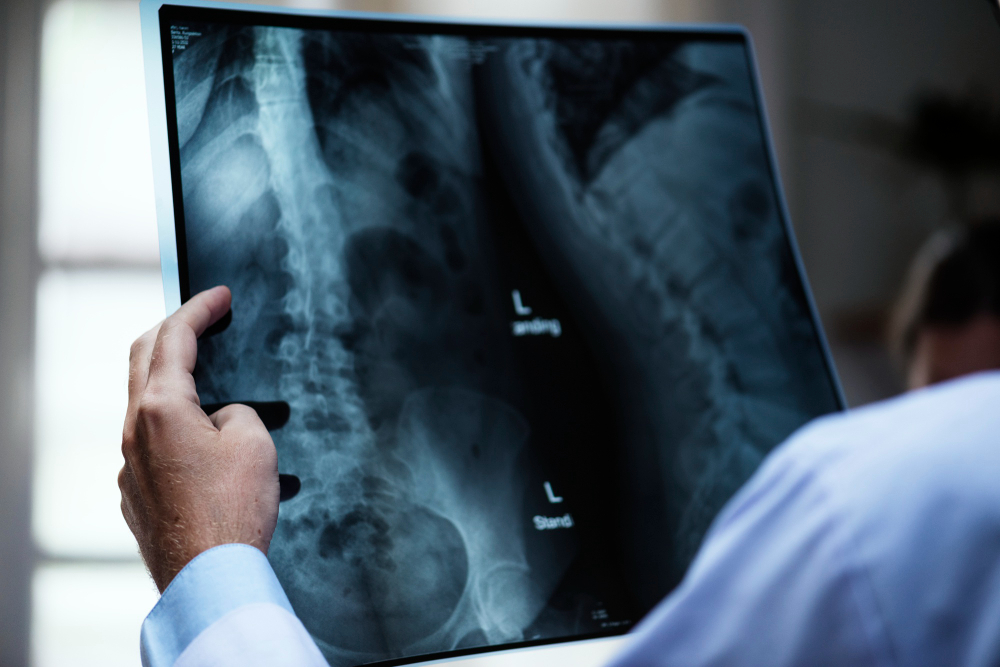
In conventional spine surgery, a surgeon works from pre-operative imaging, which includes X-rays and scans taken hours or days before the procedure begins. By the time the patient is on the operating table, the spine has moved. Anatomy has shifted. The pre-operative picture is already out of date.
For straightforward cases, working from pre-operative scans is manageable. For complex scoliosis surgery where the spine is significantly rotated and curved, and where multiple implants need to be placed with sub-millimetre accuracy, it introduces meaningful risk. Without real-time imaging and precise instrument tracking, even experienced surgeons are working with incomplete information during the most critical moments of the procedure.
The result is higher rates of misplaced implants, greater risk of complications, and a higher likelihood that revision surgery will be needed further down the line.
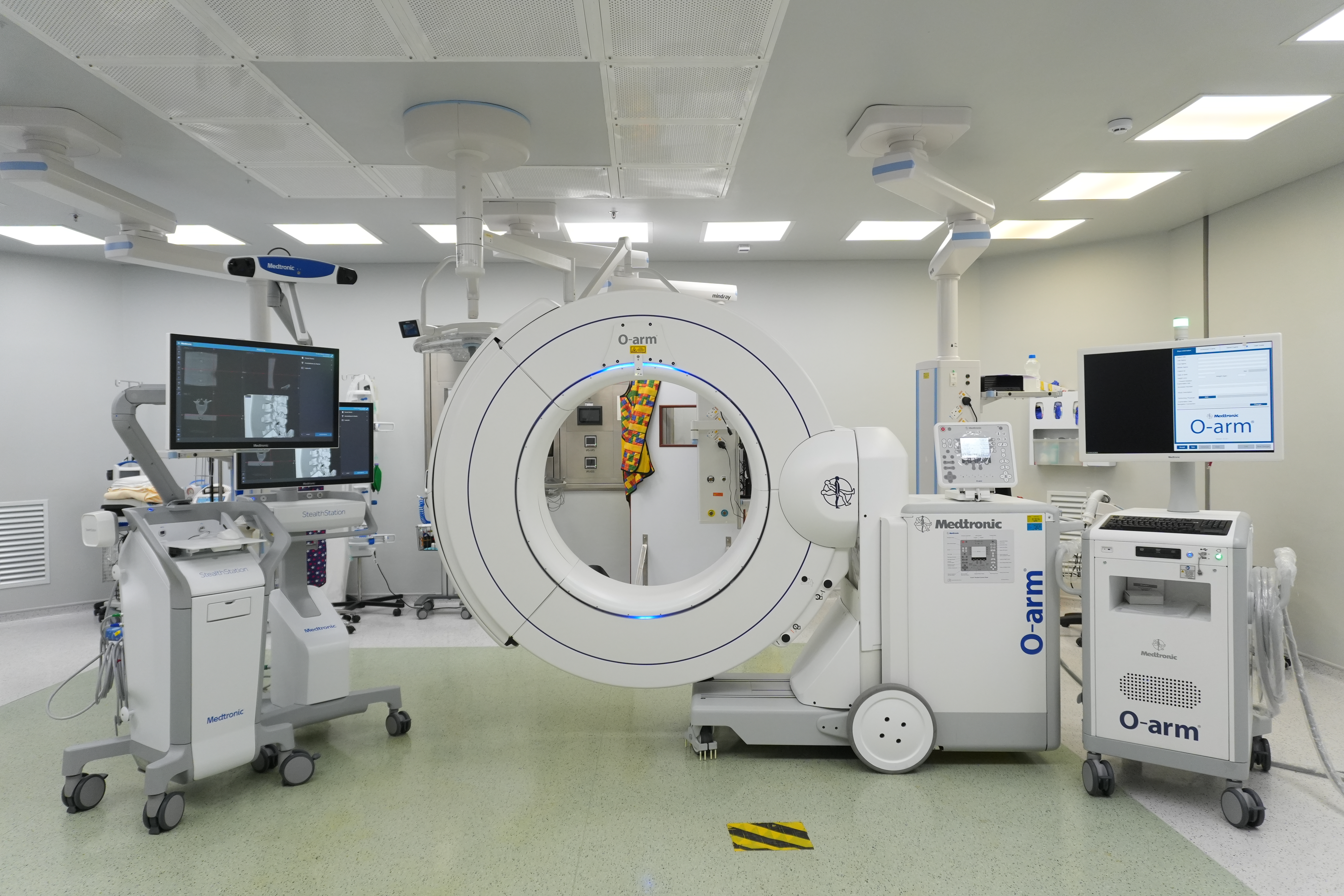
Sunway Medical Centre Penang is the first hospital in Northern Malaysia outside Klang Valley to offer the Medtronic O-arm™ O2 Imaging System and StealthStation™ S8 Navigation System, a combined intraoperative technology platform that fundamentally changes how complex spine and scoliosis surgery is performed.
I think of the O-arm as a superpower 3D camera. In the old days, we had to rely on X-rays and scans taken before the surgery. Now, we can have it real-time. It takes a 360-degree live map of the patient's body right there on the operating table, showing me exactly what I need to see in real-time.
This is not a minor refinement to existing technique. It is a complete transformation of how intraoperative decision-making works in spine surgery.
The O-arm™ O2 is a mobile intraoperative imaging device that captures high-quality 3D images of the spine while the patient remains on the operating table. Unlike conventional imaging that requires transferring the patient mid-surgery to a separate imaging room, the O-arm™ O2 delivers a complete 360-degree anatomical map in real time. This means the surgical team is always working from the most current and most accurate picture of the patient's spinal anatomy.
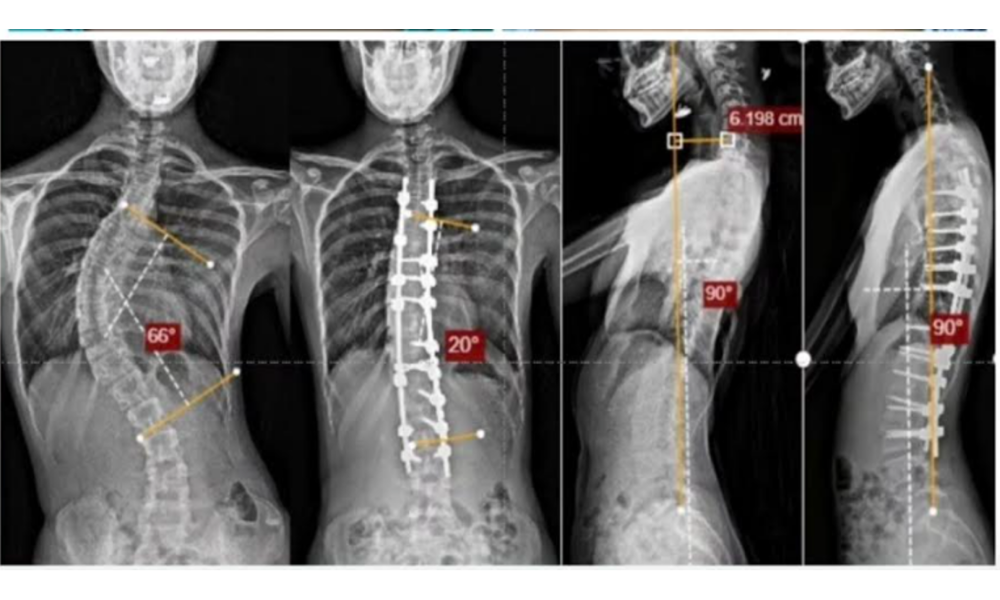
Critically, before the surgical wound is closed, a final scan is performed to confirm that every implant is correctly positioned. We are very sure that every single screw is in the correct place and the alignment is good before closure. This is precisely why our revision surgery rate is so much lower.
Once the real-time anatomical map has been established by the O-arm™ O2, the StealthStation™ S8 provides the surgical team with a live, continuously updated view of every instrument in the operative field. It displays their exact location relative to the patient's spinal anatomy on screen with sub-millimetre precision throughout the entire procedure. Think of it as a surgical GPS for the spine.
Imagine driving in a heavy storm without GPS — you are guessing. With this technology, I can see exactly where every screw or instrument is going, even through bone and tissue, without needing to make large incisions.

For patients undergoing scoliosis surgery, the combination of the O-arm™ O2 and S8 Navigation System directly addresses the most significant sources of surgical risk and uncertainty. When performing a very complex surgery like scoliosis correction, we know exactly the alignment we achieve and that every single screw is safely positioned. In most cases, my patient is able to walk the very next morning.
The clinical evidence supporting this technology shows meaningful improvements across every major measure of surgical outcome:
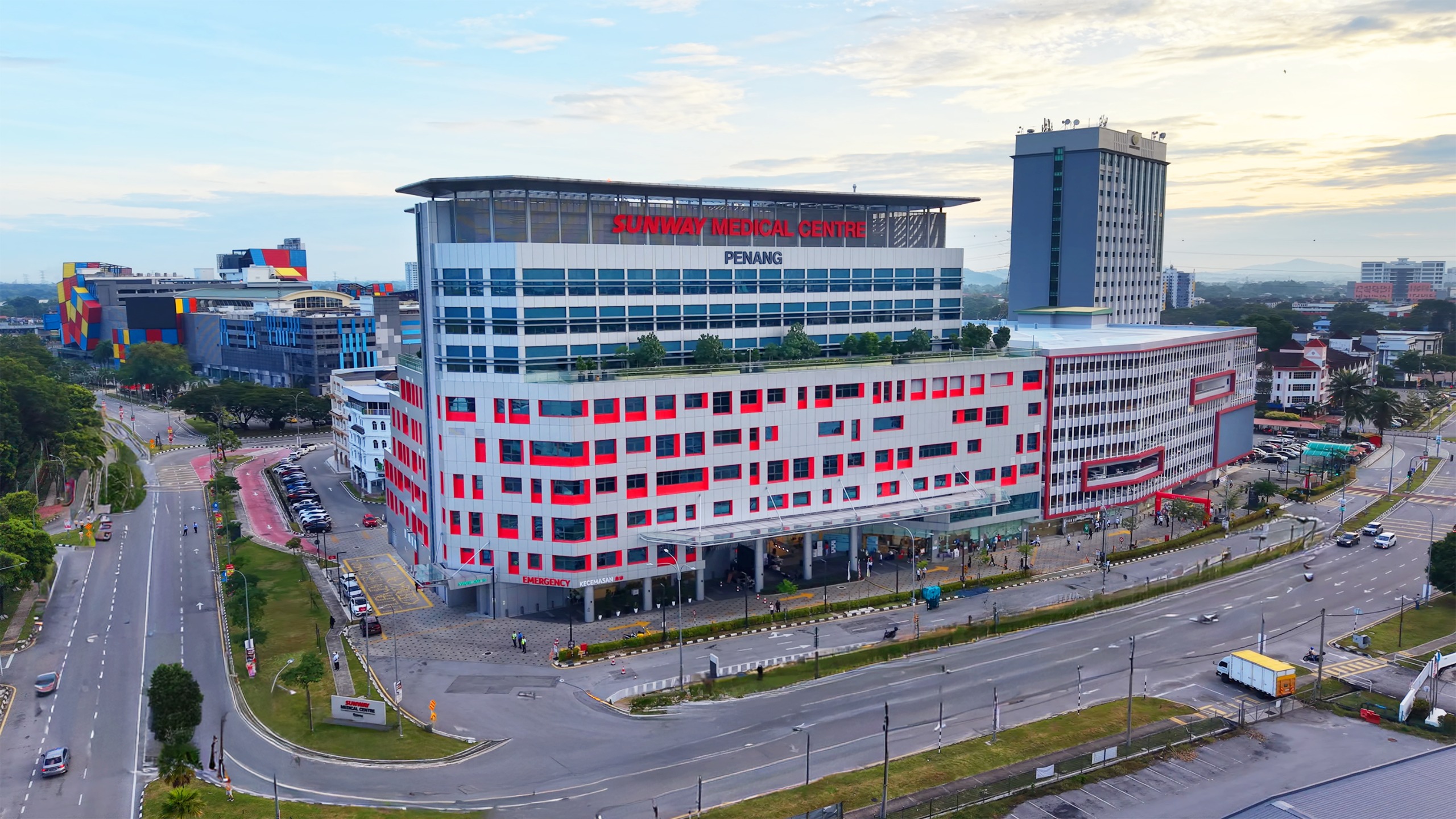
The introduction of the O-arm™ O2 and StealthStation™ S8 at Sunway Medical Centre Penang means that patients in the northern region of Peninsular Malaysia no longer need to travel to Kuala Lumpur to access the highest standard of computer-assisted spine surgery. Sunway Medical Centre Penang is the first hospital in the northern region to bring this technology to patients.
We are proud to be the first hospital to bring this world-class technology to Northern Malaysia. Precision medicine is not the future. It is happening right here.
This regional milestone reflects both the hospital’s commitment to clinical excellence and my own journey as a spine surgeon, built through fellowship training in Istanbul, landmark procedures including the first Vertebral Body Tethering (VBT) surgery in Northern Malaysia, and active contribution to international spine surgery education through conferences in Turkey, Singapore, and beyond.
For patients considering scoliosis surgery or seeking a specialist opinion on a spinal condition, here is what navigated spine surgery at Sunway Medical Centre Penang involves.
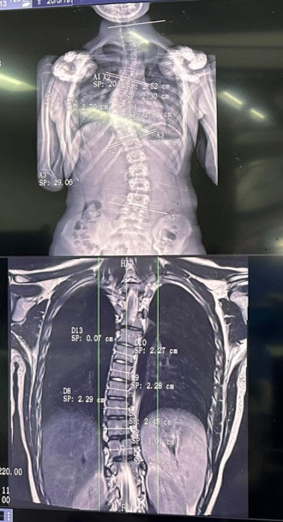
Whether you have been diagnosed with scoliosis, are concerned about a spinal condition, or are seeking a second opinion before making a surgical decision, an accurate specialist assessment is always the right first step.
To book a consultation with Dr Lim Han Sim, Consultant Spine & Orthopaedic Surgeon (Level 3, Room 310), contact us at: 04-373 9191 (Ext. 5878)
Learn more about Advanced Orthopaedic & Rehabilitation Technology at Sunway Medical Centre Penang, or visit our Scoliosis Treatment page for a full overview of conditions, diagnosis, and treatment options.
 Back
Back


























Make Appointment Now
Looking for Specialist Care? Schedule a Consultation Today.